The Many Health Benefits of Being in Nature

September 24, 2015

Here’s a great article about the benefits of spending time in nature.

In health,

Dr. Gina

___

Being In Nature Benefits Health-But How?

September 23, 2015 | by Stephen Luntz

Photo credit: In his essay, Walking, Thoreau said: "In wildness is the preservation of the world." The same might go for our health. Credit: SNEHIT/Shutterstoclk

Photo credit: In his essay, Walking, Thoreau said: “In wildness is the preservation of the world.” The same might go for our health. Credit: SNEHIT/Shutterstock

Time spent close to nature is good for our health, numerous studies have shown. What is much harder to establish, however, is how and why this occurs. Now a paper claims the immune system may be the primary pathway through which exposure to the natural world can lead to a wide array of health benefits.

Modern medicine and plumbing – which brings us clean water and removes our waste – have doubled our lifespans, but technology sometimes comes with a cost to our health. It seems urban living is part of that, with research linking lack of access to the open air and relatively pristine environments to an astonishing range of conditions from depression and ADHD to cancer. The effect nature is thought to have on us has earned the name Biophilia. Now a paper attributing these diverse benefits to the immune system has been published in Frontiers of Psychology.

Ming Kuo of the University of Illinois, Urbana-Champaign, isn’t jumping to conclusions. As the author of some of the papers indicating these benefits herself, she uses the review article to propose 21 pathways that might connect time in nature with better health.

“While each is likely to contribute to nature’s impacts on health to some degree and under some circumstances, this paper explores the possibility of a central pathway by proposing criteria for identifying such a pathway and illustrating their use,” Kuo writes. “A particular pathway is more likely to be central if it can account for the size of nature’s impacts on health, account for nature’s specific health outcomes, and subsume other pathways.”

Her conclusion is that “enhanced immune functioning emerges as one promising candidate for a central pathway between nature and health. There may be others.”

“Nature doesn’t just have one or two active ingredients. It’s more like a multivitamin that provides us with all sorts of the nutrients we need. That’s how nature can protect us from all these different kinds of diseases – cardiovascular, respiratory, mental health, musculoskeletal, etc. – simultaneously,” Kuo said in a statement.

Kuo suggests that fresh air, sunlight and a beautiful view relax us and turn off our “fight or flight” responses. “When we feel completely safe, our body devotes resources to long-term investments that lead to good health outcomes – growing, reproducing, and building the immune system,” she said. If so, many of the same benefits can be achieved for those who really aren’t the outdoor type by doing what they love, be it reading a good book or spending time with friends. However, Kuo adds these don’t provide elements of good health such as Vitamin D.

Some of Kuo’s previous work has looked at the ways cities can be redesigned to maximize the health benefits provided by relatively natural environments, even if provided in the limited format of urban parks or community gardens. A better understanding of the mechanisms might help us understand how to fit nature into our busy lifestyles, if that is not too much of a contradiction. Still, we hope you’re reading this on a mobile device in a forest or at the beach.


Natural Ways to Prevent and Treat Colds & Flu

August 31, 2015

Feature_Flu

There are about 1 billion colds in the US every year, with every child catching it 6-10 times a year, resulting in 22 million school days being lost every year!

When it comes to cold and flu season, prevention really is the first line of defense. To keep your body’s defense system–the immune system–in peak condition, follow our immunity-boosting tips to help your body fight off the bugs looking for a host. And, for times when you are feeling ill, the second set of tips can help ease your symptoms and support a quick recovery.

Cold & Flu Prevention Tips

Your immune system is at work 24/7! The best approach to supporting immune function is a healthy lifestyle that includes stress management, exercise, whole foods, nutritional supplementation, and the use of plant-based medicines. On a daily basis, you can take the following steps to help your immune system keep you healthy:

  • Wash your hands regularly to help prevent transfer of bacteria.
  • Stay clear of people sneezing or coughing. Avoid shaking hands or other close contact with anyone whom you know to be sick.
  • Make sure your home and work space are well-ventilated. Even on a cold day, open a window for a few minutes to clear out stale air.
  • Follow a consistent sleep/wake schedule so the immune system can repair and recover.
  • Drink plenty of water and eat a balanced diet that includes a variety of organic (when possible) fruits and veggies, which contain antioxidants that help the body neutralize cellular damage.
    Healing Tips
  • Rest. Sometimes the body’s only way of getting your attention is to force you to slow down by getting sick. Don’t push through fatigue. Honor your body and sleep/rest as needed to promote healing. Reduce activity at home and at work as much as possible.
  • Increase fluid intake to include water, diluted vegetable juices, soups, and herbal and green teas.
  • Eat light meals and eat more soup. Whether you choose a vegetarian broth or a heartier bone-broth, soups for healing should be loaded with a variety of herbs and veggies.
  • Manage stress. Even just 10 minutes of meditation a day has positive effects on the immune system and promotes a positive mindset.
  • Laugh–it truly is good medicine. Patch Adams was onto something when he brought humor to his patients’ bedsides. Read a funny book. Watch stand-up comedy. Share jokes with a friend or your kids. Laughter lowers the stress hormones and elevates your mood–both are good for healing.

Vitamin, Mineral, and Botanical Support for the Immune System

There’s no panacea, but a growing body of research has shown that certain vitamins, minerals, and plant-based supplements can help prevent/curtail the symptoms of colds and flu. Some that you may want to include are listed below.

These are best tailored to your specific needs and health status, with guidance from your doctor.

  • Multivitamin and mineral formula
  • Vitamin C
  • Bioflavonoids, 1000 mg/day
  • Vitamin A
  • Vitamin D, 2000 IU/day
  • Zinc, 30 mg/day
  • Echinacea, elderberry, and astragalus (tea, capsule, or liquid extract) help prevent common cold and viral infections. Physicians and scientists continue to study the immune-enhancing effects of these and other botanical remedies.

Food for Thought. . .
“He who cures a disease may be the skillfullest, but he that prevents it is the safest physician.”
– Thomas Fuller

In health,

Dr. Gina


The Healthiest Kids on the Block

July 31, 2015

bigstock-Kids-Superhero-67023205Did you know that 40% of daily calories of US children and adolescents aged 2-18 years come from added sugar and solid fats? Approximately half of these empty calories come from six sources: soda, fruit drinks, dairy desserts, grain desserts, pizza, and whole milk.

Raising healthy kids sounds pretty simple: Provide good nutrition, 60 minutes of daily physical activity, and create a joyful and safe home environment. Do that, and you’ll reduce your child’s risk for obesity, diabetes, and other chronic disease. But you’re up against a host of unhealthy temptations including advertising, peer pressure, and an abundance of junk food in shiny packaging.

The first and most important step you have to take for your child’s health is modeling healthy habits in front of them. Make a healthy lifestyle a family affair. Keep things simple. And don’t give up when kids get picky. The tips and resources provided below will keep you on track.

Keep Kids in Motion. Once kids return to school, they are sedentary for the better part of the day. Outside of school, make sure your kids have opportunities to stretch, strengthen, and build endurance for 60 minutes daily. Make time for creative play at the park where children can engage all the major muscle groups. Provide opportunities for trying new sports or creative movement classes. Get the whole family involved with obstacle courses, biking, or hiking. When the weather outside is too hot or cold, visit an indoor pool, playscape, climbing gym, or bounce-house facility. Create a joyful atmosphere at home, check stress at the door (which is easier to do if you are exercising), and encourage playtime.

Limit Screen Time. With more schools incorporating digital devices into curricula, it’s important to monitor your child’s free time on the screen. For younger children, set a daily limit of 60 minutes, and for older children, set a limit of 120 minutes for all media–TV, movies, and games.

Consider having a “digital-free zone” in your home: one room designated just for reading, games, and music sans the headphones. Also, make one day a week (e.g., Sunday) a “device-free day” for all family members. Play games or get physically active, together.

A Balanced Diet, Not a Food Fight. No matter their age, kids can be picky eaters. Offer your child choices at meals that are acceptable to you, health promoting, and palatable. Model the healthy eating habits you want your child to have whether they are at home or out with friends.

When it comes to getting kids to try new foods, get creative: Blend veggies into homemade smoothies. Serve raw veggies with hummus. Make zucchini-based brownies. Incorporate blended or finely chopped veggies into pasta sauce for use on pizza and spaghetti. Try healthier ice cream options like Bliss (raw, vegan, organic and tastes great) or Arctic Zero.  Involve your kids in creating a beautiful fruit salad. Kids’ palates change as they age; what they like/don’t like at age 3 is likely to be different at 13 and even 23!

Introduce and reintroduce healthy selections at all meal and snack times. And don’t fight about food…that only creates a lousy mood for everyone at mealtimes. Sometimes, it really is okay to skip the asparagus and still have dessert.

Tame the Sweet Tooth. Sugar intake for children is recommended to 3-4 teaspoons a day. Cutting back on soda, candy, and cookies is only the first step. Read labels to identify added sugar, high fructose corn syrup, hydrogenated oils, and food dyes that can be hidden in foods including bread, condiments such as ketchup, crackers, cookies, candy and canned and frozen foods. Make your own frozen treats from fresh fruit, and cut down on packaged foods.

Sleep Well. During sleep, children’s bodies generate hormones important to healthy growth and development. A good night of rest allows children to wake energized for the following day. Research has shown that sleep plays a role in maintaining a healthy weight and promoting a positive mood. Try to keep kids to a daily sleep-wake routine, especially during the school week.

Healthy diet and exercise make a huge difference in the health and demeanor of children. If challenged with a behavioral and/or physical health issue you can take it a step further. At HealthBridge Medical Center we will often run lab tests to determine if a child has specific food allergies, or a particularly high demand for certain nutrients like zinc, magnesium or essential fatty acids for example.  Getting specific with nutrient supplementation and adjusting the diet accordingly makes for much happier and healthier children. It is always worth the time and effort involved.

In health,

Dr. Gina


Dark Chocolate Helps you Pay Attention

June 25, 2015

ChocolateHeart

Eating dark chocolate may help to boost attention levels and lower blood pressure. Larry Stevens, a professor of psychological sciences at North Arizona University, and colleagues conducted a study to examine the acute effects of chocolate on attentional characteristics of the brain. The researchers examined the effect that consuming a 60 % cacao chocolate had on the brain (using electroencephalography [EEG]) and blood pressure. A total of 122 participants aged 18-25 were enrolled on the study. Results showed that eating 60% cacao chocolate made the brain more alert and attentive, but it also increased blood pressure for a short time. However, an immediate drop in blood pressure was recorded in participants who consumed 60% cacao chocolate that also contained L-theanine (an amino acid analogue found in green tea). “Chocolate is indeed a stimulant and it activates the brain in a really special way,” said Professor Stevens. “It’s remarkable. The potential here is for a heart healthy chocolate confection that contains a high level of cacao with L-theanine that is good for your heart, lowers blood pressure and helps you pay attention.”


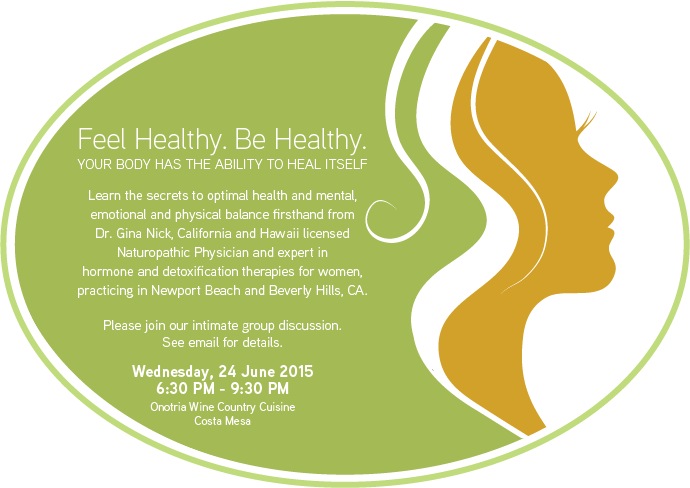
Reminder! Upcoming Event. Intimate Discussion and Dinner with Dr. Gina ~ Wednesday June 24th 6:30-9:30 PM

June 22, 2015

Please join us!

Image

HealthBridge Medical Center is inviting you to share what our patients are learning about optimal health. It’s a fascinating journey that most people wished they knew about years ago. We are all excited to share with you, your family and friends this amazing insight!

Why
Feel healthy. Be healthy. Your body has the ability to heal itself.

How
Learning the secrets to optimal health and mental, emotional and physical balance.

Who
Dr. Gina Nick, NMD, PhD is a CA and HI licensed and practicing Naturopathic Physician, President Emeritus of the California Naturopathic Doctors Association, an author, mother and entrepreneur, community volunteer and founder of HealthBridge Medical Center in Newport Beach and Beverly Hills, CA. Dr. Nick is one of Susan Sommers’ recommended physicians specializing in hormone balance, and is a member of the Forever Health Network. She is a physician spokesperson for the American College for the Advancement of Medicine (ACAM), serves on the Board of Directors for numerous medical and non profit associations, and was a featured physician on PBS. She has been in practice for 17 years.

When
Wednesday, 24 June 2015

Time
6:30PM – 9:30 PM

Where
Onotria Wine Country Cuisine, 2831 Bristol St, Costa Mesa, CA 92626 (714) 641-5952

Fee
$48/person includes 3 course menu (with gluten free options).
Cash or credit card payment upon arrival.
Beverages are not included. “Cash and carry”.

Action
Please RSVP to Julee Nishimi promptly at jnishimi@gmail.com or (714) 307-2991 or contact our office anytime. Seats are limited.

Sincerely,
HealthBridge Medical Center
DrGina.com
949-715-9321 x2
1401 Avocado Avenue Suite 810 Newport Beach, CA 92660


FDA Essentially Bans Trans Fats

June 18, 2015

small_food_packageNaturopathic Physicians have been educating the public and their patients on the dangers of trans fats (also known as hydrogenated or partially hydrogenated oils) for 30 plus years based on studies from the 1970’s showing a link between these artificial fats and heart disease.

Finally, the FDA, in an effort to prevent heart attacks and deaths, finalized its determination that the main sources of artificial trans fat are not safe. FDA gave food manufacturers until June 2018 to remove partially hydrogenated oils (PHOs) from their products after concluding that the oils are not so-called GRAS, or generally recognized as safe.

It’s hopeful that our government is finally taking action and acknowledging the SIGNIFICANT impact that our food supply has on the state of health of our citizens, and the major economic burden the US shoulders to manage chronic illnesses that can easily be prevented by removing artificial chemicals, excess sugar, high fructose corn syrup, and the like from our food supply.

Research identified a relationship between folic acid deficiencies and birth defects as early as 1965. It was not until 1992 that the United States Public Health Service shared this critical knowledge with the country and recommended that all women of childbearing age, capable of becoming pregnant, consume 400mcg of folic acid per day. It took the scientific community almost 30 years to accept that a nutrient deficiency might cause a gross distortion in human neuronal development and to recommend supplementation. Tens of thousands of children were born during this time with preventable birth defects.

Let’s use common sense, and consider listening to the doctors who pay attention to the research as it comes available rather then waiting 30 years to act on it, and who are tirelessly working to educate the public on the importance of quality food and the power of nutritional medicine to prevent and treat disease.

In health,
Dr. Gina


It’s not all in your head — it’s in your gut, too

June 10, 2015

a new way to heal stress and anxietyA new study finds decreased social anxiety among young adults who eat fermented foods. Further evidence of the connection between the gut and mood disorders, and hope for a better alternative to addictive benzodiazepenes.

In health,
Dr. Gina


Antibiotic Use in Infants Causes Disease Later in Life

May 21, 2015

Interesting new datahappy_baby is linking antibiotic use in infants (a common practice) to allergies, infectious disease and autoimmune disease later in life.  Limiting overprescribing of antibiotics, paired with appropriate probiotic use in infants will help to prevent unnecessary suffering as children mature.  Fortunately today there are simple and effective lab tests available to look at the gut ecology in children and adults, to determine if there is an unhealthy alteration of gut bacteria, and what probiotics (if any) to use.

In health,

Dr. Gina


The Brain Gut Connection

May 12, 2015
Sickness Syndrome is becoming more mainstream! I have been speaking, publishing and applying this knowledge with  patients at HealthBridge Medical Center for years with great success.
 dreamstime_1563078
Read below as a Johns Hopkins expert discusses one of the key underlying causes of anxiety and depression.  Excellent news for people challenged with these issues as it means real, long term treatment with less side effects and more focus on true healing of the body.
Anxiety and depression have been thought to contribute to gastro conditions like irritable bowel syndrome (IBS). A Johns Hopkins expert explains how what’s going on in your gut could be affecting your brain. Click here to read more…
In health,

Toxic Feminine Hygiene Products

November 28, 2014

Here is an informative post about a report released by the Women’s Voices for the Environment called “Chem Fatale” that examined the toxicity of various feminine hygiene products. They found that tampons, pads and other feminine hygiene products contain unwanted chemicals and pesticides, and can be detrimental to women’s health.

Below is the full discussion. Products applied vaginally can enter the circulation quickly, making it especially important for women to be aware of this.

In health,

Dr. Gina

___

The Dirty Secrets of Feminine Hygiene Products

The Gerson Institute

I know menstruation—and the vagina, generally—is a conversational topic that often prompts expressions of disgust, mockery, gross-out jokes or pleas for ignorance, particularly from men. But let’s all agree to be mature adults here, and talk seriously about a health issue that affects nearly every woman on the planet, and is too often ignored out of misguided politeness or squeamishness.

The average woman will have about 350 menses in her lifetime, which, given an estimated average period length of 6 days, means she will spend a total of nearly 6 years of her life menstruating. It’s estimated that the average woman uses up to 11,800 tampons in her lifetime. So that’s a lot of sustained exposure to menstrual products. And in addition to menstrual products, an estimated 10-40% of women use other feminine hygiene products such as douches, wipes, deodorants and creams

The female genitalia is the home to a very delicate balance of bacteria and yeast. If that balance is disturbed, one can end up with painful conditions such as urinary tract infections (UTIs), vaginitis, pelvic inflammatory disease (PID) and yeast infections. Some of these infections, particularly UTIs, can become quite acutely severe.

The best way to safeguard against these common, but potentially serious, infections is to prevent them altogether, and to keep the bacteria and yeast levels in balance. While there are many things you can do to avoid UTIs, yeast infections and other problems—such as urinating before and after sexual intercourse, avoiding over-washing the area with harsh soaps, wiping front-to-back, avoiding bubble baths, and wearing cotton underwear—another is to be very cautious about what types of materials and items you put “down there.”

6 Nasty Substances Found in Feminine Hygiene Products

  • Chlorine: Used to bleach cotton menstrual products, particularly tampons and menstrual pads
  • Dioxins and furans: Known carcinogens that can cause reproductive, developmental and hormonal problems, and can have a detrimental effect on the immune system. These are by-products of the chlorine used for the bleaching process.
  • Pesticide residue: Most cotton used for tampons and pads is made from conventionally-grown cotton, which is treated with heavy pesticides. While the FDA “recommends” that tampons be free of pesticide residue, testing on the popular brand o.b. detects the presence of pesticides like pyrethrum, procymidone, mecarbam and fensulfothion—which are possible carcinogens and linked to endocrine disruption. And, while the Chem Fatale report does not mention this specifically, I would also like to mention that some brands use genetically-modified cotton. If you’re avoiding eating GMO foods, you’ll probably want to reconsider putting GMO products in other parts of your body as well.
  • Fragrance: This one simple word can contain multitudes of harmful chemicals—none of which are required to be listed or disclosed on labels. “Fragrances” can include chemicals known to be carcinogens, endocrine disruptors, irritants and allergens. While these fragrances are most commonly found in douches and sanitary wipes (more on that topic later), it’s also common for pads and tampons to come with “scented” versions. Feminine deodorants and perfumes are also well-known to cause irritation and allergic reactions, in large part due to the fragrances used.
  • Parabens: Found in vaginal anti-itch creams, feminine wipes and feminine washes, typically as a preservative. Parabens are skin irritants and allergens, and may have damaging estrogenic properties.
  • Synthetic materials: Most tampons and pads are not 100% cotton these days, they are made from synthetic fabrics like rayon, or Super Absorbent Powders (SAPs). Some of these substances, along with the other chemicals and fragrances, can cause rashes and skin irritation, particularly when used in menstrual pads.

In addition to the toxicity of these various chemicals found in feminine hygiene products, I would also like to note that there are also certain types of products that are harmful to vaginal health not only due to their ingredients, but because their actual functions and purposes are inherently problematic.

Why “Douchebag” Deserves to be a Bad Word

There’s a good reason that the words “douche” and “douchebag” have become popular pejorative insults. Douches are well-deserving of the negative publicity its common usage in the modern lexicon has granted it. Douches are linked to a host of problems: vaginitis, chronic yeast infections, pregnancy complications, infertility and pelvic inflammatory disease (PID). Studies have shown a correlation between regular douching and cervical cancer. They may also cause women to be more vulnerable to sexually-transmitted infections (STIs). So, why are they so harmful? And why do they remain so popular?

The reason douches cause so many problems is that they disrupt the natural self-cleaning function of the vagina, wiping out the beneficial bacteria in the vagina and leaving it vulnerable to yeast overgrowth and “bad” bacteria. The vagina is a self-cleaning organ; the mucous that lubricates it also eliminates any harmful substances that enter it, such as bad bacteria or viruses than can cause infections. A healthy vagina needs no cleansing agents; it does just fine on its own, thanks. It certainly doesn’t need the host of disinfectants, “fragrances” or other chemicals that douches, wipes and washes contain. Yet there is still a great deal of stigma and shame regarding the vagina in regards to perceived uncleanliness, or fear of odors, so some women feel compelled to clean it or “freshen” it. And yet, because douching can disrupt the all-important flora-yeast balance in the vagina, douches can actually cause the very odor issues they purported to eliminate.

Teen girls are particularly susceptible to these fears, given the multitude of anxieties surrounding puberty and the onset of menstruation, but douches are also all-too-commonly—and somewhat disproportionately—used by low-income and minority women.

Despite the near-universal condemnation of the practice by the medical and gynecological communities, the belief that douching is “an expected and necessary part of feminine hygiene” likely persists due to advertisements that perpetuate these beliefs by preying on women’s insecurities, but also by well-intentioned but poorly-informed friends and family members.

In the 1950s, a now-notorious series of manipulative ad campaigns aimed at housewives informed them that their vaginas were dirty and smelly, and made them repulsive to their husbands. The solution to their marital woes? To “freshen up” by douching with Lysol (shudder!).

Lysol ad

There’s also the persistent myth that douching prevents pregnancy. This is because archaic contraceptive methods involving douching date back practically to prehistory, and remained popular through much of the 20th century, thanks to the aforementioned Lysol ad campaigns, which were subtly angled at selling Lysol douches as a contraceptive. You may notice that, in the ad above, the tag-line refers to Lysol as a “germ-killer,” which just happens to rhyme with “sperm-killer,” and others described Lysol as a “germicide.” Lysol was, frighteningly, the most popular contraceptive in America from the 1920s until the early 1960s. Of course, it didn’t really work; a 1933 study showed that half the women surveyed who used Lysol as a contraceptive became pregnant. In some cases, douching can increase risk of pregnancy by pushing sperm up into the cervix, rather than washing it out!

So please, if you spot a bottle of Summer’s Eve under your friend, wife, daughter or partner’s bathroom sink, share this information with them, and help stop the—if you’ll pardon the bad pun—“flow” of bad information about women’s health. And, use this information to make conscious and informed choices about the products you choose to put in your body—especially in such a sensitive area!

Check back here next week, we’ll list the top natural, chemical-free alternatives to Tampax and common drugstore menstrual products!


About the Author: Ally Bacaj is the Gerson Institute’s Communications Specialist. She joined the Institute after graduating from St. Mary’s College of Maryland in 2010. Ally manages the design and content of our website and our blog. She also shares news from the Gerson Institute on our Facebook page, Pinterest and Twitter.

In her spare time, you can find Ally unearthing vintage treasures at the swap meet, with her nose stuck in a book or snuggling with her pet bunny, Dennis Hopper.


Photo credits: Whispered Between Women, Smithsonian Magazine