 Wyeth, manufacturer of synthetic hormones for women is under investigation for making a false claim that it’s Centrum Cardio is the only complete supplement that lowers cholesterol. That’s interesting because in my medical practice we use several different high quality nutritional supplements to lower cholesterol, that do not contain harmful binders, dyes, and things like hydrogenated oil, found in some Centrum products. One of the most profound treatments for lowering cholesterol levels that I use in my practice is a detoxification program that I researched, formulated and published a book about, entitled Clinical Purification. I test my patients’ blood before and after the program. Patients who have been on statin medications for 10 years are able to discontinue them, with full blessing from their primary care doctor and cardiologist. Nature cure at its best.
Wyeth’s Nutritional Supplement Claims Under Investigation
September 18, 2008
 Leave a Comment » |
  cholesterol, Diet and Disease, Hormone Replacement Therapy, Latest Nutritional Research, Nutritional Supplements and Disease, Prevention, Toxins and Detoxification | Tagged: cholesterol, detoxification, dr. gina nick, lower cholesterol naturally, Naturopathic Medicine, nutrition for cholesterol, statin, synthetic hormones |
  Permalink
 Posted by Dr. Gina Nick
Vitamin B12 Protects Against Dementia- Even in the Absence of a B12 Deficiency
September 13, 2008A new research study published in the Journal Neurology found that people aged between 61 and 87, with higher blood levels of vitamin B12, were six times less likely to experience brain shrinkage (which is associated with dementia) then people with lower levels of B12 in their blood.
Prior studies on the link between B12 and dementia focused on how increased levels of B12 and other B vitamins were linked to low levels of homocysteine, an amino acid that increases risk of dementia and cognitive impairment.
This study, which followed 107 volunteers, found another connection between B12 and the brain- the prevention of brain shrinkage.
The best sources of B12 are meat, fish, milk and eggs. Unfortunately these foods are problematic for people with health challenges as they are foods of animal origin that tend to be more difficult to digest. Furthermore, such foods are often tainted with pesticides (stored in animal fat), heavy metals, and hormones.
Interestingly enough, people studied in this trial were NOT shown to be deficient in vitamin B12 using standard blood tests. In my practice, I will test for B12 just to make sure a patient does not show elevated levels, before prescribing subcutaneous vitamin B12 shots, or vitamin B12 supplementation (often in the form of a complete multivitamin formula). However, a patient certainly does not need to show a B12 deficiency to derive benefit from this vitamin. B12 therapy is effective for weight loss, mental function, energy and depression.
In health,
Study details
Vogiatzoglou and co-workers recruited the community-dwelling volunteers and collected blood samples to measure levels of vitamin B12, holotranscobalamin (holoTC), methylmalonic acid, total homocysteine, and folate. Brain volume loss per year was calculated using MRI scans.
Over five years of study, the researchers noted a greater decrease in brain volume among people with lower vitamin B12 and holoTC levels.
Indeed, people with lower levels of B12, defined as blood levels below 308 picomoles per litre, were six times more likely to experience brain shrinkage, said the researchers. On the other hand, high levels of methylmalonic acid or homocysteine, or low folate levels were not linked to brain volume loss.
“Low vitamin B12 status should be further investigated as a modifiable cause of brain atrophy and of likely subsequent cognitive impairment in the elderly,” stated the researchers.
It is important to note that none of the volunteers were (known to be) vitamin B12 deficient.
“Previous research on the vitamin has had mixed results and few studies have been done specifically with brain scans in elderly populations. We tested for vitamin B12 levels in a unique, more accurate way by looking at two certain markers for it in the blood,” said Vogiatzoglou.
The potential of supplements
Commenting independently on the results, Dr Susanne Sorensen from the Alzheimer’s Society said: “Shrinkage is usually associated with the development of dementia.
“As vitamin B may be given as a food supplement, it may be useful to include tests of vitamin B levels in the general assessment of health of older individuals.
“This is another example of why it is crucial for people to lead a healthy lifestyle with a balanced diet rich in B vitamins and antioxidants.”
B12 for brain
A University of Oxford study reported in 2007 that increased vitamin B12 levels may reduce the rate of age-related cognitive decline and dementia by 30%.
The study, published in the American Journal of Clinical Nutrition, followed 1648 participants for 10 years and also found that increased levels of the amino acid homocysteine doubled the risk of dementia or cognitive impairment.
Previously, epidemiological studies have reported that high levels of the amino acid homocysteine are associated with suspected or confirmed dementia. Indeed, the Framinghamstudy reported that people with homocysteine levels above 14 micromoles per litre of serum had twice the risk of dementia.
Source: Neurology
9 September 2008, Volume 71, Pages 826-832
“Vitamin B12 status and rate of brain volume loss in community-dwelling elderly”
Authors: A. Vogiatzoglou, H. Refsum, C. Johnston, S. M. Smith, K. M. Bradley, C. de Jager, M. M. Budge, A. D. Smith
4 Comments | Diet and Disease, Latest Nutritional Research, Naturopathic Medicine, Nutritional Supplements and Disease, Prevention | Tagged: Add new tag, dr. gina nick, Naturopathic Medicine, vitamin B12, vitamin deficiencies | Permalink
Posted by Dr. Gina Nick
The Power of Probiotics
August 29, 2008 There is a lot of talk these days about the value of probiotics. Probiotics are the “good bacteria” that are naturally supposed to live in your gut. There are literally hundreds of strains of these bacteria, and they play an important role in immune function, weight loss, vitamin status, detoxification, absorption and digestion. When you take antibiotics, they clear out the “bad bacteria” in your gut, but they also clear out the good bacteria, and like every other system in the body, it is vital that you maintain balance in the gut. You need enough good bacteria in your gut to prevent bad bacteria from taking hold and causing symptoms. This bad bacteria can take many forms which can cause a wide range of symptoms such as a cold gas, bloating, fatigue and many others.
In my practice, one mistake I often see patients making is taking too much of one strain of a good bacteria, like acidophillus, to the exclusion of other good bacteria like Lactobacillus GG and sacharomyces. When I test their levels of probiotics in their gut, I find that they have an overgrowth of one strain. So again, it is about balance. If you take a probiotic, rotate which one you take, about every three months. Some of my favorites include ABX Support (especially if you are taking or have recently taken antibiotics), Probiotic Pearls and Culturelle.
Here’s to a healthy and happy gut!
3 Comments | Diet and Disease, Nutritional Supplements and Disease, Prevention, Toxins and Detoxification, Weight loss | Tagged: acidophillus, detoxification, digestion, digestive disorders, dr. gina nick, good bacteria, natural health, Naturopathic Medical Doctor, Naturopathic Medicine, probiotics | Permalink
Posted by Dr. Gina Nick
Meditation and Nutraceuticals- a True Prescription for High Blood Pressure
August 21, 2008 Today’s NPR morning edition, “To Lower Blood Pressure, Open Up and Say ‘Om'”, discussed research demonstrating that a daily meditation practiceincreases nitric oxide levels, which opens up blood vessels, and decreases blood pressure. A physician interviewed on the show, Dr. Zusman, talked about how he was able to reduce his patients blood pressure prescription medications. Taking it a step further, it would be helpful to interview licensed Naturopathic Physicianswho recommend meditation together with nutrients and herbs proven to maintain healthy blood pressure levels. Some of the natural medicines we use in practice include:
Hawthorne Berry Extract
Magnesium
N-Acetyl-Cysteine
Taurine
Vanadium
Vitamin B6
Potassium
Pomegranate Extract
These medicines do not have the side effects that are common with prescription drugs, and the results I see in practice are excellent. They work on various mechanisms that affect blood pressure including acting as natural ACE inhibitors, calcium channel blockers, diuretics, beta-blockers, endothelial protectors, renin regulators and antioxidants. It typically takes about 30 days of consistent use to see significant results.
So before reaching for the prescription pad, why not first try a more natural, and less expensive, approach to helping our body to heal.
3 Comments | Diet and Disease, Latest Nutritional Research, Naturopathic Medicine, Nutritional Supplements and Disease, Pharmaceuticals | Tagged: Blood Pressure, dr. gina nick, natural health, Natural Heart Health, Naturopathic Medicine | Permalink
Posted by Dr. Gina Nick
Taking a Summer Break from ADHD Meds
July 16, 2008 Summer is a perfect time for kids to take a break from their ADHD meds. Some experts feel that taking a medication vacation when your child is heading off to summer camp can be problematic. This is because with psychotropic medications like ADHD drugs and antidepressants, symptoms can get worse when you stop the medication-even worse then they were when you first started the treatment.
However, there is a light at the end of the tunnel. If you start working with a qualified and licensed Naturopathic Medical Doctor experienced in treating ADHD without psychotropic medications, then you can start naturopathic treatment before taking your child off the medication, making the transition to a medication-free holiday a smooth one.
Some of the foundational natural medicines I use in practice when helping children get off of their prescription medications include:
- 1-2 capsules Similase Jr with each meal
- 1-3 tablespoons Coconut Milk Powder per day-mixed in a smoothie or with any beverage
- 1-2 capsules ABX Support per day with meals
- ½-1 scoop of ITI Greens Formula in juice or water. *Note- can mix with Coconut Milk Powder if desired to improve taste
- 1 scoop of Spectrum Awakening, three times daily, away from protein food. Can be mixed with juice or applesauce.
- 1-3 Attention Gels per day, with or without food
Learn more about ADHD and how to treat the underlying cause of this condition by clicking on the links below:
5 Comments | ADHD, Attention Deficit Hyperactivity Disorder, Childhood Nutrition, Latest Nutritional Research, Naturopathic Medicine, Nutritional Supplements and Disease, Orthomolecular Psychiatry, Pharmaceuticals | Tagged: Add new tag, ADHD, Childhood Nutrition, dr. gina nick, Naturopathic Medical Doctor, Naturopathic Medicine, Nut | Permalink
Posted by Dr. Gina Nick
Vitamin D Levels in Mom Affect Dental Health in Child
July 8, 2008Canadian researchers at the University of Manitoba presented the results of the first study ever done to evaluate the impact of a mother’s vitamin D status during pregnancy on the dental health of her child. The researchers analyzed the vitamin D status in 206 pregnant women in their second trimester and found that only 21 of them had adequate vitamin D levels. Vitamin D levels were related to prenatal vitamin use and consumption of vitamin D rich foods. The infants born to mothers with low vitamin D levels had an increased risk of tooth enamel defects and early childhood tooth decay.
 As a licensed Naturopathic Doctor, I see pregnant women and test them for their vitamin D status. Oftentimes their levels are low and they are placed on a prenatal nutritional program that includes supplementation with Vitamin D3, above and beyond what is in their prenatal vitamin. I also encourage them to spend 10-20 minutes in the sun, with their bellies exposed, per day. Sun exposure can increase vitamin D3 levels in the blood however some women lack the appropriate enzymes necessary to convert sun exposure into adequate vitamin D in their bloodstream.
Food sources of vitamin D can be difficult to find and to consume on a daily basis. Cod liver oil, egg yolk, and foods fortified with vitamin D are the most accessible to women. The flesh of fish such as salmon and tuna are also rich sources but I do not recommend that pregnant or nursing women consume these fish due to their high concentration of heavy metals such as mercury.
This research was presented on July 4th, 2008 at the 86th General Session of the International Association for Dental Research. It was funded by the Manitoba Medical Service Foundation, the Manitoba Institute of Child Health, the Dentistry Canada Fund, the University of Manitoba, and Dairy Farmers of Canada.
To learn more visit the International Association for Dental Research.
-Dr. Gina
Leave a Comment » | Childhood Nutrition, Diet and Disease, Latest Nutritional Research, Naturopathic Medicine, Nutritional Supplements and Disease, Pregnancy | Permalink
Posted by Dr. Gina Nick
Green Tea Protects Heart Arteries
July 5, 2008 A new research study, led by Dr. Nikolaos Alexopoulos of Athens Medical School in Greece, shows that drinking green tea keeps heart arteries flexible and relaxed-allowing the body to better withstand changes in blood pressure. Researchers compared the effects of drinking 6 grams of green tea per day (3-4 cups), with drinking a diluted caffeine beverage and water. What they found was that those individuals that drank the green tea daily had more relaxed and pliable blood vessels, as demonstrated on ultrasound. And the effects were cumulative and long-lasting. The researchers assessed the green-tea drinkers’ blood vessels two weeks after daily consumption of the tea and discovered that their blood vessels were more dilated then they were at the beginning of the study.
The flavonoids found in green tea reduce inflammation, relax blood vessels, prevent blood clot formation, and act on the endothelial lining of the vessels. Green tea also contains antioxidants that demonstrate cancer-protective effects.
I enjoy green tea extract each morning, as part of a powdered greens blend we carry at LTP Natural Medical Center , that promotes healthy immune function and detoxification.
View the research study here.
-Dr. Gina
Leave a Comment » | Diet and Disease, Latest Nutritional Research, Nutritional Supplements and Disease, Toxins and Detoxification | Permalink
Posted by Dr. Gina Nick
N-acetylcysteine Holds Promise for Chronic Schizophrenia
June 24, 2008A new research study shows that supplementation with N-acetylcysteine significantly improves symptoms in schizophrenia patients in as little as two weeks.
 In the study, 140 patients (mean age, 37 years) with chronic schizophrenia were randomly assigned to receive, in double-blind fashion, NAC (1 g twice a day) or placebo, in addition to their usual medication, for 24 weeks. The primary outcome measure was the change from baseline on the Positive and Negative Symptoms Scale (PANSS) and on subscales that measured positive and negative symptoms separately. In intent-to-treat analysis, at 24 weeks the degree of improvement was significantly greater in the NAC group than in the placebo group for the PANSS total score (p < 0.01) and for the PANSS negative symptoms score (p < 0.02). The effect sizes were consistent with a moderate beneficial effect of NAC. No improvement was seen in the NAC group relative to the placebo group after eight weeks, indicating that the beneficial effects of NAC were slow to develop. Secondary endpoints included scores on the Clinical Global Impression Severity and Clinical Global Impression Improvement scales, which measure treatment effects not necessarily related to psychosis. NAC was also significantly superior to placebo on these scales, and the beneficial effects were evident as early as two weeks after the start of treatment. In addition, when compared with placebo, NAC treatment significantly improved akathisia (p = 0.022), which is a movement disorder caused by antipsychotic medications. NAC had no effect on the PANSS positive symptoms subscale.
NAC is a precursor to glutathione synthesis which is why it is showing benefit in schizophrenia. Glutathione levels are decreased in the cerebrospinal fluid and in portions of the brain of patients with schizophrenia.This is interesting because glutathione plays a key role in the removal of free radicals and schizophrenia patients tend to have a higher level of oxidative free radicals in their brain.
I practice Orthomolecular Medicine, and often utilize stabilized glutathione in patients with schizophrenia.This new research further validates the benefits of using stabilized glutathione to treat schizophrenia, as glutathione levels are often low in the cerebrospinal fluid and in the brain of schizophrenia patients.
-Dr. Gina
3 Comments | Latest Nutritional Research, Naturopathic Medicine, Nutritional Supplements and Disease, Orthomolecular Psychiatry | Permalink
Posted by Dr. Gina Nick
A Low-Cost Alternative to Omega 3 Fish Oil Supplements
June 19, 2008The Wall Street Journal just published a report indicating that the major increase in use of omega 3 fatty acids is leading to a potential shortage in supply. This is triggering efforts by major companies such as Monsanto to produce genetically engineered seeds that produce the omega 3 oils. Hold on a second…there is NO long term evidence that consuming omega 3 fatty acids form genetically modified foods is safe. Before drinking the Kool-Aid and consuming omega 3 oils at any cost (even to the detriment of our long term health), you might want to try not overeating…
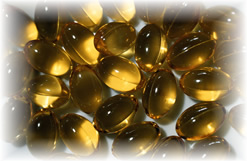 Overeating will cause an omega 3 deficiency. There is mounting evidence that eating a balanced healthy diet (similar to the one laid out in yesterday’s blog post) is a good way to prevent an omega 3 deficiency.
The website www.sicksyndrome.com has medical seminars posted that discuss inflammation in the brain and depression (Sickness Syndrome Depression), and the benefits of omega 3 fatty acids and how eating too many calories will increase inflammation in the body and cause an omega 3 deficiency.
Non-fish oil sources of DHA and EPA are found in algae products available at the health food store. The reason fish oil is high in DHA and EPA is because of the algae that the fish eat! Other alternatives to fish oil are hemp seed and flax seed oils. The only challenge there is that the body still needs to convert those oils into the usable DHA and EPA and the process is inefficient. In our medical practice we use products containing Martek’s algae-sourced fatty acids and also recommend that patients use Udo’s Essential Blend with DHA.
-Dr. Gina
Leave a Comment » | Diet and Disease, Latest Nutritional Research, Nutritional Supplements and Disease | Permalink
Posted by Dr. Gina Nick
Sickness Syndrome Depression: Inflammation in Your Brain
March 19, 2008 Several years ago, I began lecturing to physicians and publishing research on the topic of Sickness Syndrome Depression. At first, no one was all that responsive to the idea that inflammation in the body could cause mental health challenges like depression, anxiety and sleep disorders.
Well…there was a research study published in the American Journal of Psychiatry by the American Psychiatric Association yesterday that supports the use of “anticytokine therapy,” that basically means anti-inflammatory therapy, in the treatment of depression!!! Not surprisingly, the study was done by doctors who have a disclosed relationship with top psychiatric drug company, Eli Lilly.
If you want the genuine information about this condition, and how YOU can treat it NATURALLY, without a drug that has side effects, visit www.sicksyndrome.com
Leave a Comment » | Diet and Disease, Latest Nutritional Research, Naturopathic Medicine, Nutritional Supplements and Disease, Pharmaceuticals | Permalink
Posted by Dr. Gina Nick

 Dr. Gina's Blog